Krakow on Foot and by Bike: A Leisurely Summer in Kazimierz, Tyniec, and Nowa Huta
Five days to enjoy a group vacation exploring the sights of Kraków and its surroundings, getting around on foot and by bike
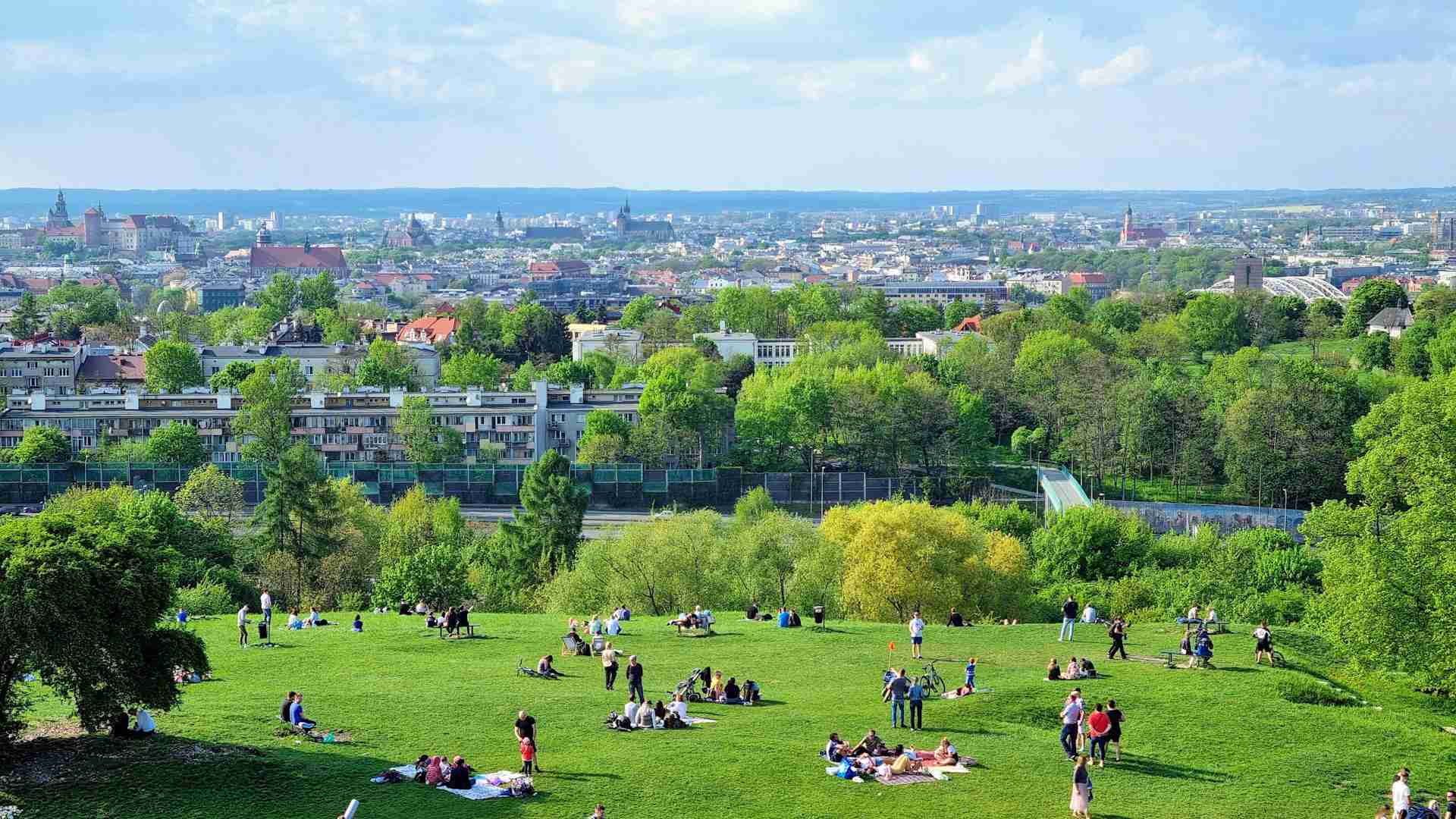
Krakow is a pleasure to experience in the summer: you can walk through the historic center, the Planty Park offers shade and a breath of fresh air, the Vistula River leads you out of the city without a hitch, and each day brings a different atmosphere without disrupting the rhythm. This itinerary alternates between the monumental Kraków of Rynek Główny and St. Mary’s Basilica, the living history of Kazimierz, an easy bike ride tothe Benedictine Abbey of Tyniec, the secluded charm of Lanckorona, and the urban landscape of Nowa Huta. It’s the perfect option for those seeking a cultural yet dynamic journey —featuring a single day of cycling through Kraków’s streets on an easy route, time to listen to a guide who truly lives the city, sample an obwarzanek, and raise a toast among the vineyards. More than just a whirlwind tour of attractions, it’s a chance to discover Kraków over a few days, with a lighthearted spirit and a sense of curiosity.
Arrival in Kraków, check-in at the hotel, and a first meeting with the local guide. The day is designed to help you get a feel for the city at a leisurely pace: a short walk around the neighborhood, a few useful landmarks to help you find your way, and our first dinner together—all to start the trip off at the right pace.
Second day
Kazimierz Jewish Quarter and theOldTown ( )
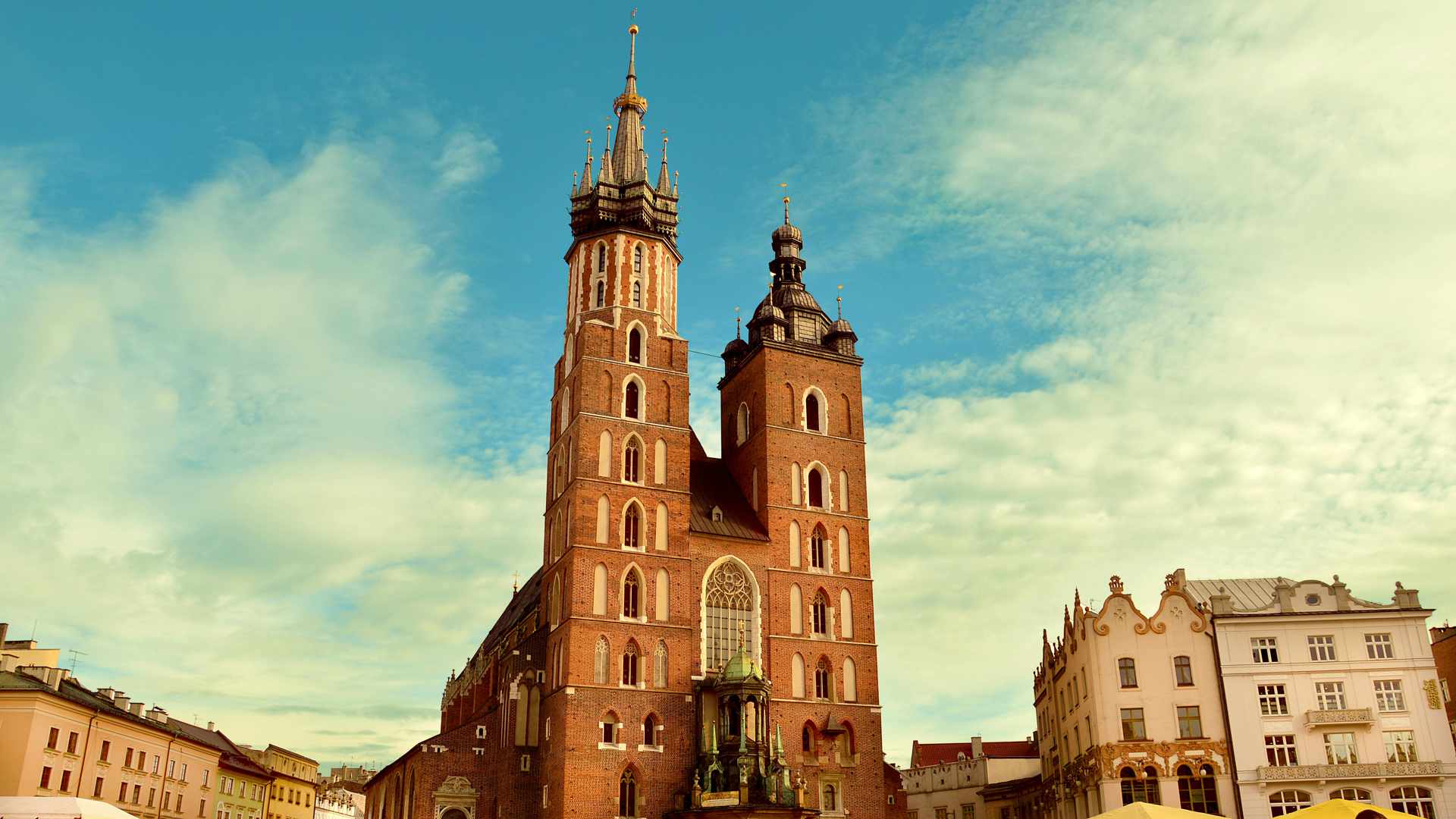
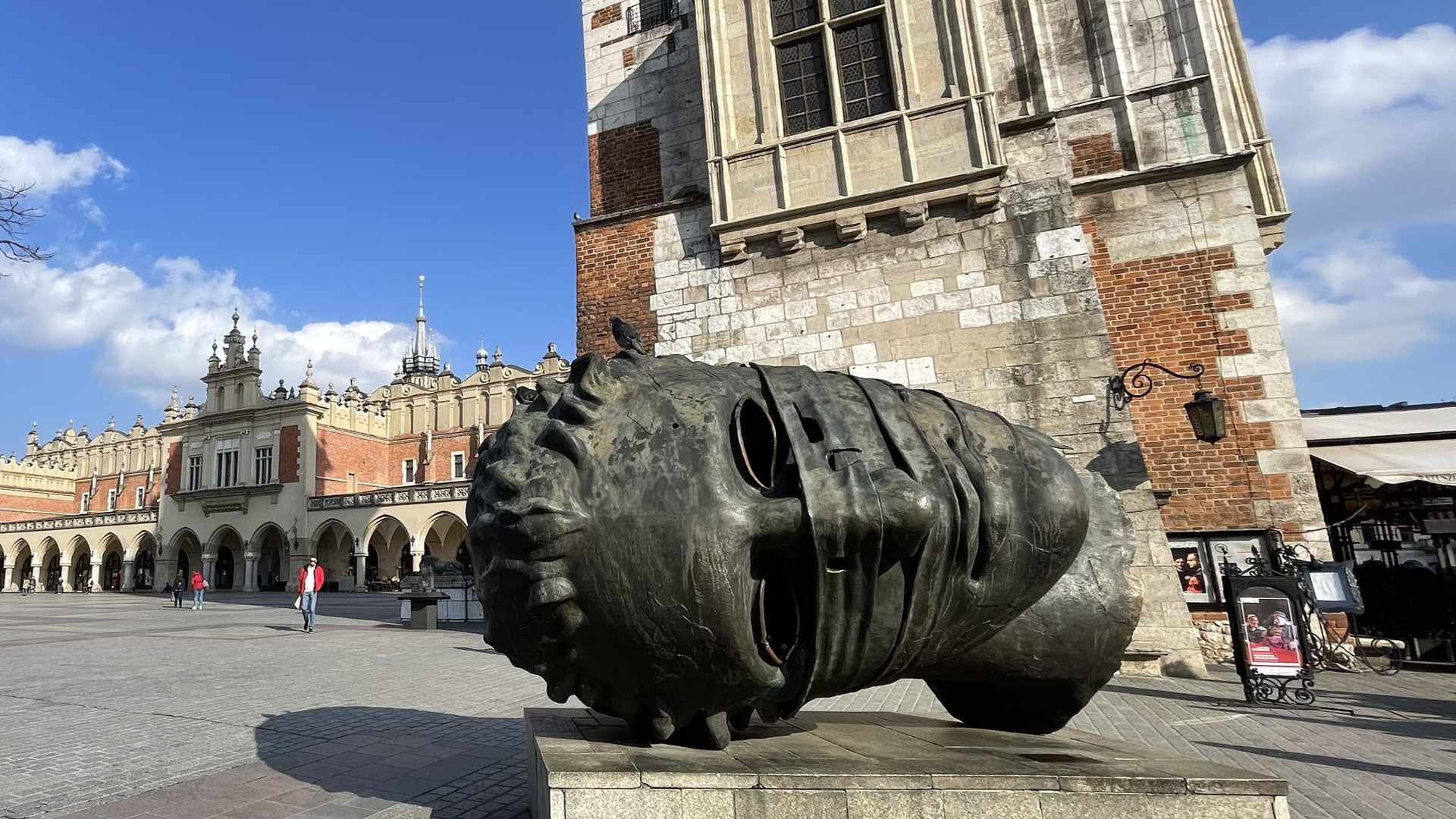
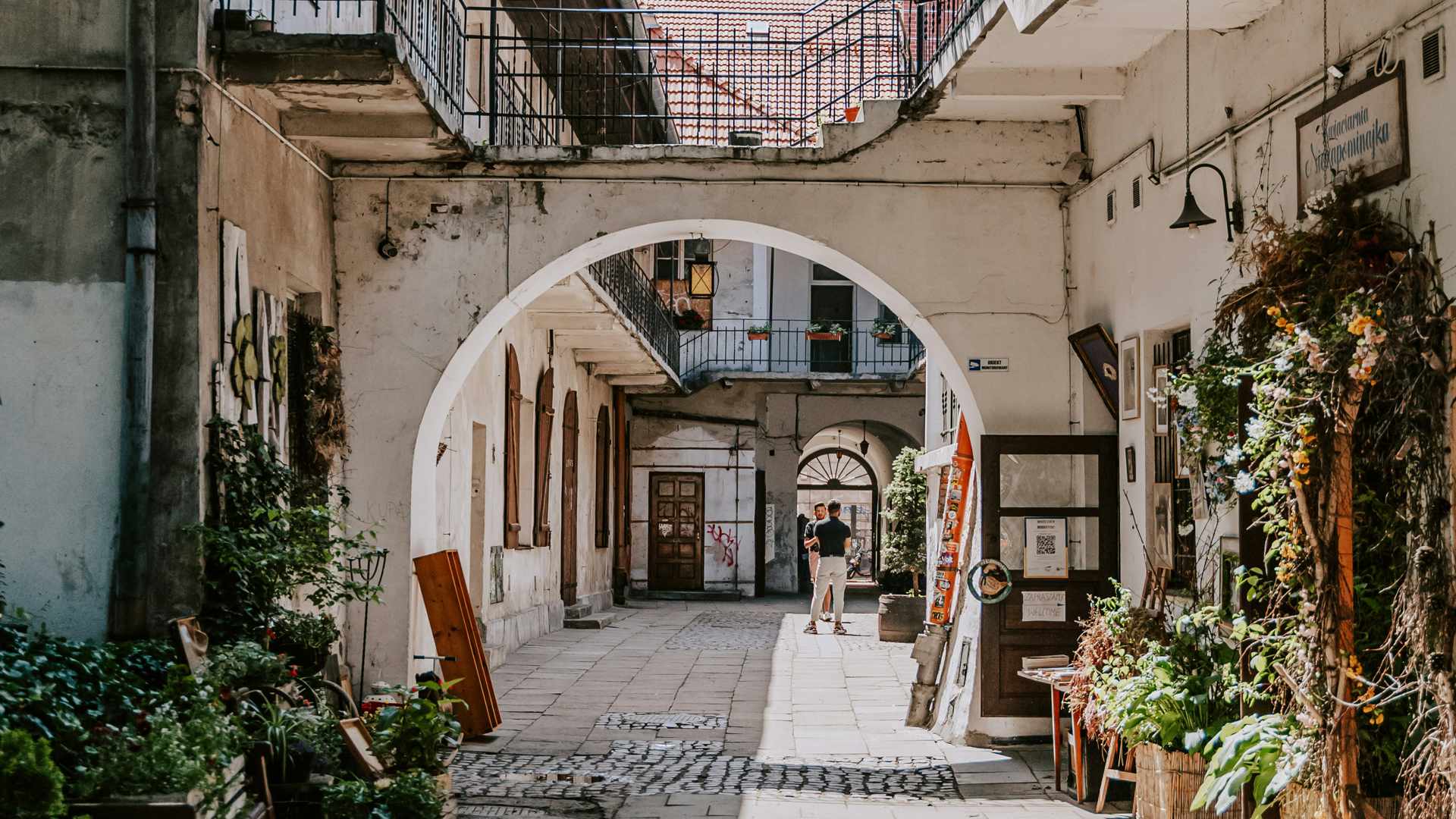
We’ll spend the day exploring historic Kraków and its rich, layered identity. We’ll start in Kazimierz, the Jewish quarter, where we’ll visit the Remuh Synagogue and the nearby Kraków Jewish Cemetery, both testaments to the city’s Jewish community’s long history. We’ll also stop at the Stara Synagogue, the city’s oldest, and at small squares like Plac Nowy, the beating heart of the neighborhood. With its art galleries, murals, and quaint little shops, Kazimierz invites us to stop, observe, and listen. We then continue toward the heart of the Old Town, part of the UNESCO World Heritage Site of Kraków’s historic center: Rynek Główny, the Sukiennice, St. Mary’s Basilica, and the Collegium Maius form a rich yet accessible walking route, always on a human scale. We conclude our walk along the avenues of the Planty, the green belt that surrounds the city center and makes the stroll even more pleasant in the summer. Amid trees, flower beds, and
shaded avenues, the slow pace of our walk allows us to reflect on the day’s impressions and
fully experience the city’s magic.
Third day
Cycling along the Vistula to Tyniec We leave the city center and follow the Vistula on an easy, straightforward, and scenic route. We leave the city’s hustle and bustle behind to immerse ourselves in a slower, more natural pace. This is the day that shifts our perspective on the trip: the city opens up, the landscape slows down, and we reach Tyniec, where the Benedictine abbey overlooks the river from its rocky outcrop. We visit the monastic complex—one of the most important religious sites in the area—and then stop at Winnica Tyniec, a project that has revived one of the region’s oldest winemaking traditions, with a tour and tasting. Here,
a guided tour of the vineyards and the cellar awaits us, as we discover the region’s winemaking tradition. We return to Kraków in the late afternoon, still at a leisurely pace, with time to relax after a
day spent outdoors, before dinner at a traditional Kraków restaurant.
Route info: approximately 25 km on a scenic, easy, flat bike path.
Fourth day
The Village of Lanckorona and Nowa Huta
In the morning, we leave Kraków to head to Lanckorona, a small hilltop village known for its sloping town square and wooden houses with arcades, which make it one of the most recognizable examples of wooden architecture in Małopolska. It’s a stop that soothes the eyes: we stroll among picturesque views, art studios, and quiet moments, enjoying an atmosphere very different from the urban hustle and bustle of the previous days. A stop at Caffè Arka gives us the chance to savor a traditional Polish dessert and take in the view of the surrounding hills, soaking up the village’s peaceful and romantic atmosphere. In the afternoon, we return to Kraków and shift gears once more with a visit to Nowa Huta: Plac Centralny, Aleja Róż, and the Arka Pana tell the story of the city’s socialist era and its subsequent transformation. The tour also includes the so-called Centrum Administracyjne Nowej Huty, a complex of monumental buildings nicknamed “the Vatican” by locals due to their grandeur and classical symmetry reinterpreted in a socialist style. Here, the tour’s value lies not only in its architecture but also in its narrative: you come to understand that Kraków is not just one city, but many cities all in one journey. Return to the city center by tram.
Fifth day
Our organized vacation in Poland has come to an end, but we take with us the memory of a group trip to Kraków rich in discoveries—spanning history, nature, and local traditions. We return home with a complete picture of Kraków: cultured yet accessible, intense yet never overwhelming, urban yet open to green spaces, the Vistula River, and new encounters. Every day brought us authentic experiences, from the atmosphere of Kraków’s Old Town and Kazimierz to the bike ride to Tyniec, and on to the discovery of Lanckorona and Nowa Huta—different yet complementary places that capture the full richness of this trip to Poland.
accommodation in double rooms
Tyniec admission ticket
breakfasts, one dinner at the hotel, and one at a traditional restaurant
wine tasting and Tyniec Winery
guide/interpreter
health and baggage insurance
bike rental for a day
travel, admission fees not listed under "Included," lunches and two dinners, beverages, and anything not listed under "Included."
A centrally located 4-star hotel in Kraków. The hotel is situated in the lively historic district of Kazimierz.
Tour guide
A member of the Jonas team who coordinates the group and accompanies them on excursions. He speaks the local language and is an expert on the places we visit.
More info
Itinerary information
This trip is ideal for those who enjoy leisurely walks in the city and are able to cycle occasionally. The day’s bike ride covers a total of about 25 km along a flat, scenic bike path.
Notes
You can add extra days to explore the many attractions in the Kraków area on your own, including the salt mines and Auschwitz.
Important
The program may be subject to change due to weather conditions, traffic conditions, closing times, and/or at the discretion of the tour guide.
How to get there
Airplane
Krakow is accessible via direct flights from many Italian cities with Ryanair and Wizzair to Krakow Balice Airport (13 km from the city) and Katowice Airport (80 km), including Trieste, Bergamo, Milan, Rome, and Naples.




 accommodation in double rooms
 Tyniec admission ticket
 breakfasts, one dinner at the hotel, and one at a traditional restaurant
 wine tasting and Tyniec Winery
 guide/interpreter
 health and baggage insurance
 bike rental for a day