A sailing vacation with kids can seem complicated, especially if it’s your first time.
It’s normal to have doubts: Will the boat be safe? Will the kids get bored? Will sleeping in the cabin be uncomfortable? Will there be enough space? What should we bring?
The truth is that boating can be a wonderful experience for a family, but it needs to be chosen and enjoyed with the right expectations.
This isn’t a typical hotel vacation. There are no spacious rooms, set schedules, entertainment programs, or services always at your fingertips. Instead, there’s the sea every day, swimming in different spots, life in the great outdoors, little adventures, new routines, and plenty of time spent together.
For many children, that’s exactly what makes it so special: sleeping in a cabin, waking up by the water, helping out with small tasks on board, diving into a cove, watching the wind, learning new words, and experiencing the sea not from the beach but from within.
Is the boat suitable for children?
The boat is suitable for children when the trip is appropriate for their age, their temperament, and the family’s travel style.
A child who is used to being outdoors, curious, drawn to the sea, and willing to follow a few rules can experience a boat trip as a great adventure. A very young child, a very active child, or a child who isn’t used to being in shared spaces, on the other hand, might need a simpler itinerary, with short trips and frequent stops.
The first thing to consider isn't just the destination, but alsothe pace and duration of the trip.
For a family on their first boating trip, key factors include the duration of the trip, the type of boat, the availability of stops for swimming, the composition of the group, the recommended age range, and the overall level of comfort. In other words: you need tochoose the boating vacation that best suits your family.
That is why it is always important to read the trip details carefully, check the terms of the offer, and, if you have any questions, ask for more information before booking.
Why do kids like it so much?
A boat has something that many vacations no longer have:it turns every day into a little adventure.
The children watch the coastline change, observe the sailing maneuvers, learn how a sail works, swim in different waters, sleep in an unusual place, and learn that fresh water shouldn’t be wasted. They come to understand that space is shared, that nature plays a part in the itinerary, and that every day can be different from the one before.
In addition, a sailing vacation can be educational and teach children to follow the rules: where to put their shoes, how to go below deck, when to listen to the skipper, why they shouldn’t run, and why they need to keep the cabin tidy.
For a child, all of this can become part of the adventure. Andit is precisely this hands-on aspect that often makes the experience more engaging than an “all-inclusive” vacation.
How to prepare children before departure
Your boating vacation begins before you even step on board.
It’s essential to prepare the children, especially if they’ve never slept on a boat before. You shouldn’t scare them, but you shouldn’t paint too rosy a picture of the vacation either.
You can explain that the cabin will be smaller than a regular room, that there will be other people on board, that the skipper will give some important instructions, and that everyone will need to move carefully while the boat is underway.
It’s also worth mentioning that we’ll be swimming a lot, but not just swimming. There will be times when we’re sailing, times when we’re waiting, times when we’re eating together, times when we go ashore, and times when we simply need to stand on deck and watch the sea.
This information helps children imagine what will happen. And when a child knows what to expect, they usually adjust much better.
Safety on board: few rules, but clear ones
Safety is one of the main concerns for parents.
There are simple rules on a boat, but they must always be followed. Before even thinking about swimming or exploring bays, children need to understand that a boat is a different environment from a home, a beach, or a pool.
Do not run on deck, do not lean over the rail, and do not move during certain maneuvers if the skipper asks you to stay still. Personal belongings should be put away, common areas should be respected, and the crew’s instructions should be followed.
There’s no need to turn the boat into a place full of restrictions. It’s better to present the rules as part of the game: every crew works well when everyone does their part.
How much space is there really?
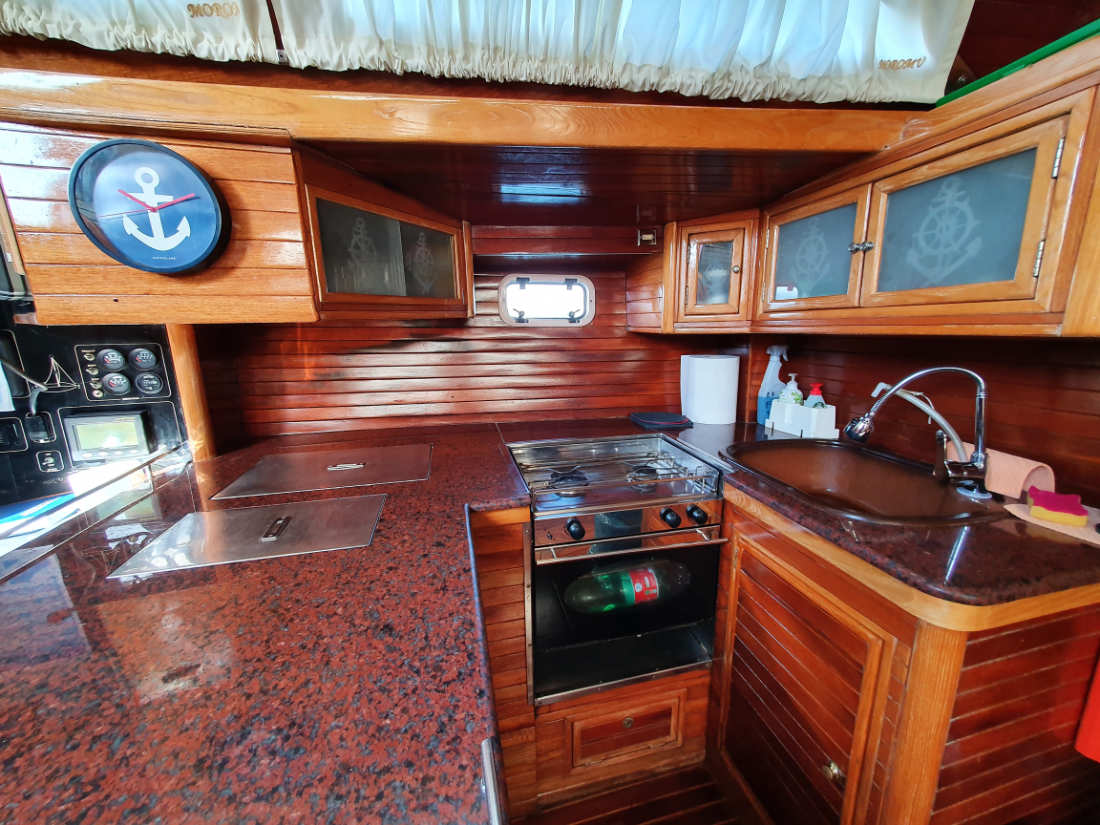
Space is more limited on a boat than in an apartment, a vacation home, or a hotel room. Cabins are mainly used for sleeping, changing clothes, and storing personal belongings. Real life takes place in the common areas: the cockpit, the deck, the dinette, the lounge areas, and the galley.
That’s why it’s important to travel light. Your luggage should be practical, easy to pack, and as compact as possible. It’s best to avoid hard-sided suitcases and large bags, as they take up space and are difficult to store. A soft duffel bag or backpack is a much better option, since they can be folded and packed more easily.
What to Bring on a Boat for Kids
When it comes to children, packing requires even more careful consideration.
You’ll need swimsuits, lightweight T-shirts, shorts, a hat, sunglasses, high-SPF sunscreen, a sweatshirt for the evening, and a windbreaker. It’s also a good idea to bring comfortable sandals, shoes with light-colored soles, a microfiber towel, a water bottle, a mask or goggles, personal medications, band-aids, and anything else your pediatrician recommends based on your child’s age.
For quieter moments, all you need are a few small toys, a book, a notebook, or something to draw with. There’s no need to pack your bag full of options. On a boat, play often springs from what’s happening around you: a new bay, a fish spotted underwater, a sail unfurling, or a course to follow on the map.
On the other hand, avoid anything that takes up a lot of space but serves little purpose: hard-shell suitcases, too many changes of clothes, large toys, delicate electronics, unnecessary shoes, and huge toiletries bags.
For a week on a boat, you don’t need a different outfit for every day. You need clothes that are comfortable, practical, and easy to dry.
Do kids get bored on a boat?
It’s one of the most common fears, but in reality, the opposite is often true.
The boat is constantly changing scenery. Every day there might be a different bay, a different swim, or a different little adventure. Even the time spent sailing can be fun if the kids get involved.
They can watch the sea, look for fish, watch the sails, help with small tasks, set the table, keep their things tidy, or simply make up games on deck.
But you don’t have to fill every moment. Boredom on vacation isn’t always a problem. Sometimes it’s the space where children start to use their imagination.
The most important thing is not to apply the same logic from everyday life to life on a boat: there’s no need to plan everything; a boat works best when you leave a little room for discovery.
What about seasickness?
Seasickness can happen, but it shouldn't be your main concern.
To reduce the risk, there are a few simple precautions you can take: eat a light meal before setting sail, stay outdoors, keep your eyes on the horizon, avoid spending too much time in the cabin while the boat is moving, drink water, and let the skipper know immediately if anyone feels unwell.
When traveling with children, it’s important to talk to them calmly. It’s best to explain that the boat moves, that it’s normal to feel a little rocking, and that if anything bothers them, they should say so right away.
Before leaving, it’s always best to consult your pediatrician about any necessary medications.
Which is better for kids: a sailboat or a catamaran?
It depends on the family.
A sailboatis simpler, more classic, and closer to the true spirit of sailing. It’s perfect for those looking for a simple, active experience that’s deeply connected to the sea.
Catamaransgenerally offer more space, greater stability, and larger common areas. For some families on their first sailing trip, this can be a more reassuring choice, especially if there are young children or if comfort is a major factor in their decision.
A little family adventure
A sailing vacation with kids isn't for those who want everything to be exactly the same as at home, just with the sea in front of them.
It's designed for those who want to try a different way of spending time together.
With a little care and the right plan, boating can become one of the most wonderful family experiences: active, fun, and authentic.