What to cook on a boat without making your day more complicated
When you're out on a boat, lunch should bepractical, quick, light, and easy to prepare with whatever you have on board. Because between swimming, anchoring, sailing, and the sun tempting you to stay outside, no one really wants to spend too much time in the galley.
Cooking on a boat doesn’t mean preparing complicated dishes;it means planningahead, choosing versatile ingredients, and coming up with recipes that can be made quickly—perhaps even without using the stove too much.
If you're planning a sailing vacation, these ideas can help you figure out what to cook on board without overcomplicating things or turning your dinette into a cramped Michelin-starred restaurant.
Before you start cooking: plan your provisions carefully
When you're on a boat, you can't always count on the supermarket down the street. What you have on board has to last, at least until the next stop. That's why it's best to choosesimple, long-lastingingredients thatare easy to combineand suitable for a variety of dishes.
Tomatoes, bread, vegetables, couscous, cold pasta, legumes, fruit, dried fruit, cheese, olives, tuna, yogurt, plant-based milk, seeds, spices, and good-quality oil are all ingredients that can save the day for many lunches.
Another useful tip is to make room forlocal products. Whether you’re in Sicily, Sardinia, Croatia, the Egadi Islands, or Tuscany, each stop has something different to offer: local cheese, more flavorful tomatoes, good bread, olive oil, olives, and seasonal fruit. Even a very simple recipe can be completely transformed if the ingredients are chosen well.
Quick recipes for the boat: best when fresh, light, and easy to share
Lunch on the boat should be light and easy toshare.
It’s best to avoid heavy meals, time-consuming dishes, or recipes with too many steps. After hours in the sun or a day out on the water, your body craves something that gives you energy without weighing you down.
That’s why bruschetta, salads, couscous, cold dishes, vegetables, fruit, and no-bake desserts work so well. They’re simple dishes, but that doesn’t mean they’re boring. With quality ingredients, they’re perfect for a lunch with a view of the sea.
The key isto think practical: dishes that can be prepared in advance, seasoned at the last minute, served easily, and enjoyed in a casual setting are your best friends when living on board.
Bruschetta with tomatoes and basil: a classic that never fails
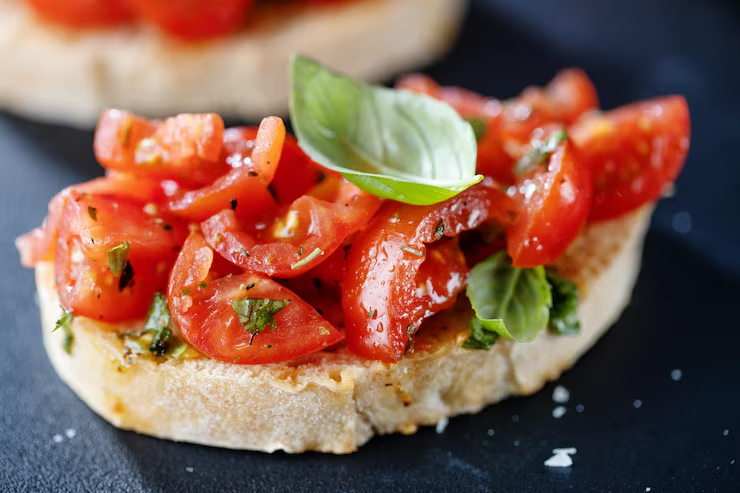
Bruschetta is one of the easiest recipes to make on a boat, but also one of the most satisfying.
You’ll need good bread, ripe tomatoes, basil, salt, and extra-virgin olive oil. If you can lightly toast the bread, even better; otherwise, just choose a crusty loaf or slice it fresh and season it well.
The great thing about bruschetta is that it takes just a few minutes to make and can easily be adapted to whatever you have in the galley. You can add olives, capers, red onion, fresh cheese, or some fresh herbs. It can serve as an appetizer, a light lunch, or the perfect solution when the group is hungry and you don’t want to turn on the stove.
Couscous with vegetables: a smart lunch for a boat trip
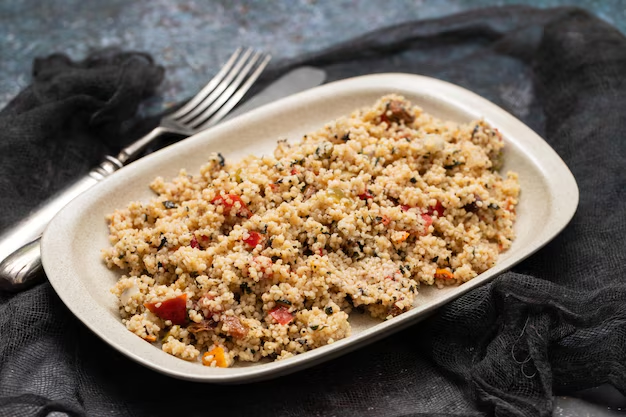
Couscous is probably one of the most convenient ingredients to bring on a boat.
It’s quick to prepare, uses very little water, doesn’t require long cooking times, and can be seasoned in countless ways. It’s perfect when you want a more substantial lunch without spending too much time in the kitchen.
The base is simple:couscous, hot water, oil, salt, and spices. Turmeric, mild curry powder, pepper, or paprika can instantly add more flavor. Once it’s ready, you can add fresh or sautéed vegetables, cherry tomatoes, zucchini, eggplant, carrots, celery, olives, chickpeas, tuna, or local cheese.
Couscous is also convenient because it can be prepared in advance and served warm or cold. This makes it ideal for a day on the boat, especially when you want to spend more time enjoying the sea and less time in the kitchen.
Summer Salad: Fresh, Nutritious, and Quick
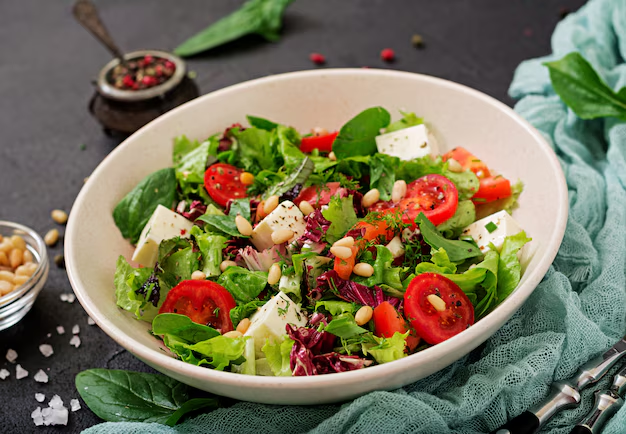
A big salad is another perfect option for a boat lunch.
You can start with a base of crisp lettuce and add cherry tomatoes, cucumbers, carrots, corn, olives, avocado, nuts, seeds, and perhaps a thinly sliced apple to add a fresh and unique touch. To make it more filling, you can add cheese, legumes, tuna, or hard-boiled eggs, if you have them on hand.
The dressing should be kept simple: extra-virgin olive oil, lemon, salt, and maybe a few seeds. On a boat, especially on hot days, heavy dressings are almost never a good idea.
A big salad has one huge advantage: it’s quick to make and can be tailored to the group. Those who want something lighter can keep it simple, while those who are hungrier can add a protein source.
Chia pudding: a no-bake dessert to make ahead
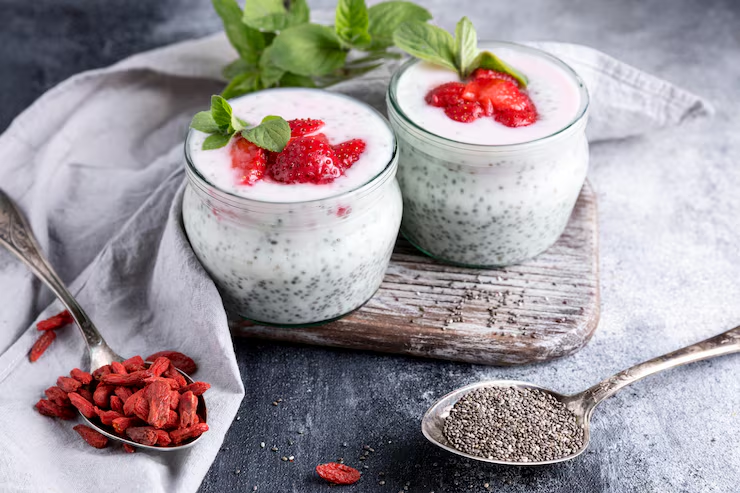
Even dessert on a boat can be simple.
Chia pudding is a convenient option because it doesn’t require cooking and can be made ahead of time. Just mix chia seeds with plant-based milk, let it sit for a few hours, and then top it with whatever you have on hand.
The simplest ratio is one part chia seeds to about four parts plant-based milk. You can use almond, oat, soy, coconut, or rice milk. After a few hours, the seeds swell and create a creamy texture.
At that point, you can add yogurt, fresh fruit, dried fruit, chopped chocolate, honey, or raisins. It’s a refreshing dessert that you can customize and easily prepare the night before, so it’s ready to eat the next day.
It’s not your typical Italian vacation dessert, that’s true. But it works really well on a boat: it’s light, refreshing, doesn’t require an oven, and lets you end lunch on a sweet note without making things complicated.
What to Avoid When Cooking on a Boat
When you're on a boat, it's bestto avoid overly complicated recipes.
Anything that requires multiple burners, too many utensils, lengthy prep work, or ingredients that are hard to store is likely to be impractical. Cooking on board involves smaller spaces, different schedules, and a more streamlined approach than at home.
It’salso bestto avoid heavy meals. After eating, people often go back out into the sun, go sailing, or go swimming. Heavy, fried, or hard-to-digest foods can throw off the rhythm of the day.
Another common mistake isbuying too much. Your pantry should be well-stocked, but in a sensible way. Too many fresh ingredients risk going bad, too many packages take up space, and too many “maybe we’ll use these” items just end up creating clutter.
Eating on the boat is also part of the trip
Lunch on the boat is one of the times when the group gets together. We set the table simply, share whatever we have, taste something we’ve prepared together, discuss the route, and talk about the next bay or the evening’s stop.
That’s why quick recipes on a boat shouldn’t feel like a last resort—they’re often the best choice: just a few quality ingredients, quick prep time, fresh flavors, and the sea all around.
In the end, a bowl of couscous eaten by the water or a slice of bruschetta made after a swim can be much more satisfying than a complicated dish that took a lot of effort to prepare.
Simple lunches, the real sea
Cooking on a boat doesn’t mean sacrificing flavor; it means choosing recipes that are suited to the setting.
If you’re planning your next trip on board, start here: a well-thought-out pantry, a few clever recipes, and the freedom to enjoy the journey without spending all day in the kitchen.